The easiest way to tell aluminum from steel is the magnet test. Steel is generally magnetic, while aluminum is not. Beyond that, aluminum is noticeably lighter, won’t rust the way steel does, and makes a dull thud when you tap it — steel gives off a cleaner, more resonant ring.
Telling one metal from another might seem like something only a machinist would know, but the skill is genuinely useful for DIY repairs, recycling, and workshop projects. Getting the identification right means you’ll choose the correct cutting blade, the appropriate welding technique, and the right fasteners — all of which matter more than people usually expect when they’re standing in the garage holding an unmarked piece of metal.
The good news is that you don’t need a lab or any specialized equipment. Your senses, a magnet, and a few minutes are usually enough. In this guide on how to tell if something is aluminum or steel, we’ll go over the simple steps you can take to identify these two metals.
What Are the Basic Differences Between Aluminum and Steel?
At a fundamental level, the two metals differ in ways that are physically detectable once you understand what to look for. Steel is a ferrous metal — meaning it’s built around an iron-carbon base — which makes it dense, relatively heavy, and typically magnetic. Aluminum, by contrast, contains no iron at all. That’s why it’s non-magnetic, and why a piece of aluminum feels almost suspiciously light the first time you pick it up expecting steel.
The iron content in carbon steel also makes it vulnerable to rust. Exposed to moisture and oxygen, it forms iron oxide: that familiar red-brown flaking crust. Aluminum doesn’t rust in that way. It oxidizes, yes, but the result is a fine white or chalky layer that tends to seal the surface rather than eat through it — a meaningfully different failure mode.
There’s also a hardness gap worth keeping in mind. Steel generally resists deformation better, while aluminum is softer and easier to machine. Neither property is a flaw; they’re just different design trade-offs.
8 Simple Step-By-Step Guidelines on How to Tell if Something is Aluminum or Steel
Step 1: Perform the Magnet Test
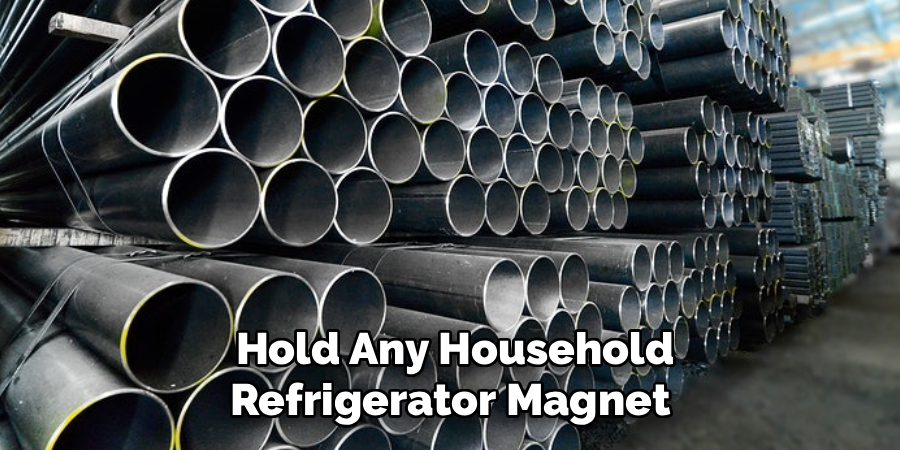
This is the fastest check you can do, and it tends to be the most immediately telling. Because steel contains iron, it’s generally magnetic — hold any household refrigerator magnet near the surface, and it should pull noticeably toward steel. A stronger rare-earth neodymium magnet gives you a more definitive result if you have one on hand.
If the magnet snaps firmly to the surface, you’re almost certainly dealing with some form of steel. No attraction at all suggests aluminum — though it’s worth knowing that certain grades of austenitic stainless steel (the 300 series, for instance) are also non-magnetic, which can muddy the result. The magnet test is a starting point, not a verdict.
Step 2: Compare the Weight and Density
Steel is roughly two and a half times denser than aluminum, and that difference is hard to miss once you’re holding the material. A solid steel bar feels heavy in a way that seems slightly disproportionate to its size. Aluminum, by comparison, often surprises people — it feels almost hollow even when it’s clearly solid.
The most practical approach here is comparison. Pick up a piece of known steel in one hand and your unknown piece in the other. If your unknown piece feels dramatically lighter for the same apparent volume, aluminum is the likely answer. This two-handed comparison tends to make the density difference obvious even without a scale.
Step 3: Check for Signs of Rust
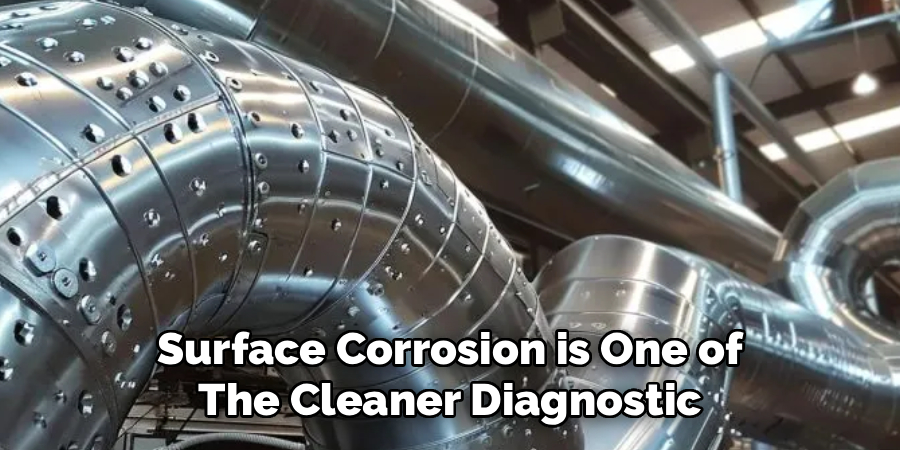
Surface corrosion is one of the cleaner diagnostic signs. Carbon steel corrodes through oxidation of its iron content, forming the reddish-brown rust most people recognize immediately. If you see flaking orange or brown deposits on the surface, you’re looking at ferrous metal.
Aluminum doesn’t produce that. What it does form — usually on older or weathered pieces — is a dull white or gray powdery residue. If you rub a corroded spot and a chalky white substance comes off on your finger, that’s aluminum oxide, and your piece is aluminum. The color alone (red-brown vs. white-gray) is often enough to distinguish the two corrosion types at a glance.
Step 4: Listen to the Sound It Makes
This one gets overlooked, but it works. Take a wrench, a hammer handle, or anything comparably hard and give the metal a light tap — not hard enough to leave a mark, just enough to generate a sound.
Steel produces a bright, slightly ringing tone that carries for a beat or two after impact. Aluminum absorbs the vibration more quickly and gives off a flatter, more muted thud. The difference becomes more apparent when you tap both materials back to back. It may seem like an imprecise method, but after a few comparisons, the tonal difference becomes fairly easy to recognize.
Step 5: Conduct a Spark Test
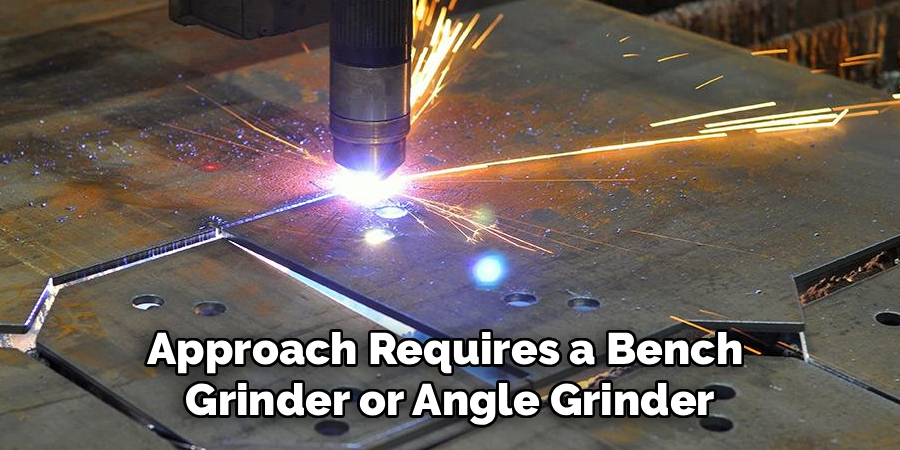
This approach requires a bench grinder or angle grinder, so it’s worth doing only when other methods haven’t given you a clear answer. Before you start, put on safety goggles and heavy gloves — grinding metal creates debris, and some of it travels fast.
Press the edge of the unknown piece lightly against the spinning wheel. Steel throws off a shower of bright yellow-white sparks in a characteristic branching pattern. Aluminum produces no sparks. Instead, it simply grinds away — and it tends to clog the wheel in the process, because its lower melting point causes it to smear rather than chip. That wheel-clogging behavior is itself a tell.
Step 6: Test the Hardness and Malleability
Steel is structurally resistant to scratching and deformation. Try dragging the edge of a steel key or a flat-head screwdriver tip across an inconspicuous section of the surface. On steel, you’ll get little to no mark; on aluminum, you’ll see a clear gouge or groove with minimal effort.
A thin aluminum sheet can also be bent by hand with moderate force, whereas steel of the same thickness pushes back considerably. This isn’t a precise hardness test in any technical sense, but as a quick field check, it’s useful — particularly for flat stock or sheet material where you can apply pressure directly.
Step 7: Examine the Metal’s Color and Finish
The two metals look similar at first, but they differ on closer inspection. Unpolished aluminum tends toward a flat, slightly whitish gray — partly because surface oxidation happens quickly and shifts the tone. It doesn’t have the depth or reflectivity of bare steel.
Carbon steel is typically darker in its raw state and may carry a blue-black mill scale if it hasn’t been processed further. Polished stainless steel gets very close to mirror-bright, with a clarity that polished aluminum doesn’t quite match — aluminum’s reflection is slightly cloudier, almost softer in quality. Color alone isn’t reliable enough to use as a primary test, but it can support or complicate a conclusion you’ve already started forming through other methods.
Step 8: Analyze the Heat Transfer Rate
Aluminum conducts heat significantly better than steel does. Leave a piece of aluminum in direct sunlight for a few minutes, or hold it near a mild heat source, and it warms up quickly and evenly. Move it away from the heat, and it cools just as fast.
Steel absorbs heat more slowly, but once it’s warm, it holds that temperature longer. If you’re in a situation where you can safely compare two pieces under identical heat conditions, aluminum’s rapid warm-and-cool cycle is a distinguishing characteristic. This is admittedly a less practical field test than the others, but in contexts where other checks have been inconclusive, it may suggest a direction worth pursuing.
Following these steps on how to tell if something is aluminum or steel, you’ll be able to confidently identify the material of a given object.
Common Mistakes to Avoid When Testing Metals
Relying on a single test — particularly the magnet test alone — is where most identification errors happen. Non-magnetic stainless steel gets misread as aluminum regularly, and the mistake has real consequences if you’re cutting or welding based on that assumption.
Another common oversight is testing a painted or coated surface without accounting for the coating. A thick layer of paint can mask weight differences, deaden the acoustic test, and visually obscure any surface corrosion. Where you can, scrape or sand a small patch to reach bare metal before testing.
When Should You Use Professional Metal Testing?
Home testing methods are suitable for most sorting tasks, recycling decisions, and general DIY work. But there are situations where the margin for error is too small for field identification. Structural and load-bearing applications, in particular, may require knowing not just whether something is aluminum or steel, but which alloy grade — and that’s a question a refrigerator magnet can’t answer.
Professional metallurgists use X-ray fluorescence (XRF) analyzers and optical emission spectrometers to identify exact alloy compositions. These tools are standard in aerospace manufacturing, automotive engineering, and any context where specific welding procedures or mechanical tolerances are formally specified. If you’re working on anything where the wrong call could create a safety problem, professional analysis is worth the cost.
Frequently Asked Questions About Identifying Metals
Q1: Can I Use A Regular Household Magnet For Testing?
A1: Yes, a standard refrigerator magnet works well enough for a basic check. That said, if the piece is coated in thick paint or happens to be a weakly magnetic alloy, a light household magnet may not register the pull clearly. A neodymium rare-earth magnet is stronger and tends to eliminate the ambiguity — they’re inexpensive and worth keeping in a toolbox specifically for this purpose.
Q2: Does Stainless Steel React The Same Way As Carbon Steel?
A2: Not consistently, which is part of what makes stainless steel a complicating factor in identification. Austenitic stainless steel — the 300 series grade used in most kitchen and architectural applications — is often non-magnetic, so it behaves like aluminum on the magnet test. It also resists red rust in a way that carbon steel doesn’t, meaning the corrosion check won’t help either. When stainless is a possibility, the hardness test and spark test tend to be more informative.
Q3: Are There Chemical Tests Available For Home Use?
A3: There are testing kits on the market designed for home or field use. They typically involve applying a small drop of acid solution to the metal surface and reading a color change. They’re not complicated to use, but the chemicals involved do require proper handling — gloves and eye protection are necessary, and you should follow disposal instructions carefully. For most everyday identification needs, the physical tests covered here may be sufficient, but chemical kits add a layer of confidence when you need it.
Final Thoughts on Metal Identification
Getting this right doesn’t require specialized training or expensive tools. With a magnet, your hands, and a bit of attention to weight and sound, you can work through most identification questions in a few minutes.
The tests here work best in combination — one method may suggest aluminum, but two or three pointing the same direction means you can act with confidence. Keep a magnet in your workshop and you’ll be better prepared than most people give themselves credit for. Thanks for reading this guide on how to tell if something is aluminum or steel.

About
Stuart Rich is a distinguished figure in the world of metalworking and fabrication, with a decade of expertise creating innovative and sustainable metal projects. His professional focus lies in merging traditional blacksmithing and machining with modern manufacturing techniques, fostering designs that are both practical and durable. As the author of Metalenify, Stuart Rich delves into the art and science of metallurgy and DIY metal creation, inspiring artisans, hobbyists, and industry professionals alike.
Education
RMIT University
(Melbourne, Australia)
Associate Degree in Engineering Technology (Mechanical / Manufacturing)
Focus on metallurgical properties, industry-driven projects, and practical metal craftsmanship. Gained hands-on experience with traditional machining and digital manufacturing tools, such as CAD, CNC software, and precision welding equipment.
Nottingham Trent University
(United Kingdom)
Bachelor’s in Product Design and Materials Engineering (Honors)
Specialized in product design with a heavy focus on blending creativity with metal production and fabrication techniques. Participated in real-world industry projects, collaborating with architectural and hardware manufacturing companies to optimize material efficiency.
Publications and Impact
In Metalenify, Stuart Rich shares his insights on structural metal design processes, material grades, and strategies for efficient shop production. His writing bridges the gap between raw artisan knowledge and modern industrial needs, making it a must-read for both budding DIY metalworkers and seasoned fabrication professionals.